
Schenectady's Stockade Historic District: History and Home Characteristics
A look at Schenectady's Stockade Historic District: its Dutch-colonial roots along the Mohawk River, the architecture, the Walkabout, and what owning a historic home there involves.

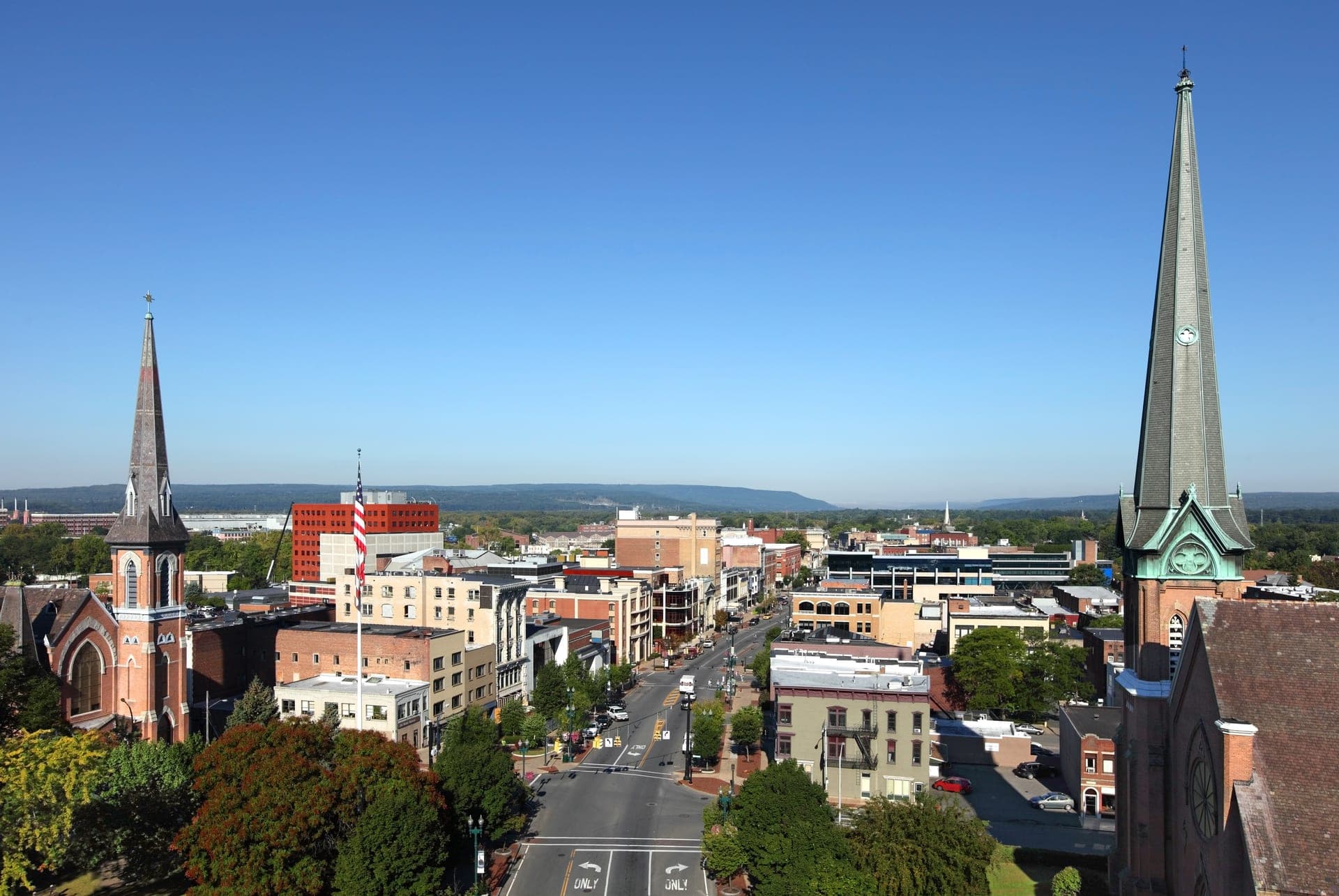
If you have ever walked the quiet, tree-lined blocks near the Mohawk River in Schenectady and wondered about the centuries-old houses leaning close to the sidewalk, you have found the Stockade Historic District. The Schenectady Stockade is one of the oldest continuously occupied neighborhoods in the country, settled by Dutch fur traders in 1661 and lived in ever since. For anyone searching for a Stockade historic district home in Schenectady, NY, it helps to understand both the history that shaped these streets and the practical realities of owning a house that predates the nation itself. Sharon Fronk works with buyers and sellers across the Capital Region, and the Stockade is one of the neighborhoods she knows well.
A neighborhood with three centuries of history
The Stockade sits in the northwest corner of the city, on a wedge of land bounded by the Mohawk River to the north and the Binne Kill to the west. Its name comes from the wooden palisade that once enclosed the original settlement. In February 1690, during King William's War, the village was attacked and burned, and many residents were killed or taken north toward Montreal. The neighborhood was rebuilt, and over the following decades it grew into a working river port, with wharves, warehouses, and boat-building along the water. A statue of a Mohawk figure known locally as Lawrence stands in the district today, marking that long and layered past.
In 1962 the Schenectady City Council designated the Stockade as a local historic district, the first of its kind in New York State. The neighborhood was later listed on the National Register of Historic Places in 1973, with its boundaries expanded in 1984. That early protection is a big part of why so much of the original streetscape survives.
The architecture you will actually see
What makes the Stockade unusual is the sheer range of styles packed into a small area. The district holds more than forty buildings older than two centuries, and the National Park Service has pointed to its dense concentration of early-period homes. Walking Front Street, Union Street, Green Street, Washington Avenue, and Church Street, you can trace the full arc of American domestic architecture in a few blocks.
- Dutch Colonial homes from the earliest rebuilding period, some with steep gabled rooflines and brick detailing.
- Georgian and Federal houses from the late 1700s and early 1800s, with symmetrical facades and fine doorways.
- Greek Revival and later Victorian-era homes with the porches, brackets, and decorative trim of the 1800s.
- Landmark buildings woven among the houses, including the First Reformed Church, the historic Stockade Inn, and several other early churches.
The asymmetry of the street pattern itself is a clue to the age of the place. These lanes follow paths laid out long before modern grids, which is part of the neighborhood's character.
What owning a historic Stockade home involves
A house this old carries character that no new build can replicate, and it also carries responsibilities. Because the Stockade is a designated historic district, exterior changes are reviewed by the city's Historic Resource Commission. If you plan to alter the outside of a property, replace windows, change siding, or modify the facade, you generally need a Certificate of Appropriateness before the work begins. The Commission reviews exterior features using the Secretary of the Interior's Standards for rehabilitating historic buildings. Interior changes are typically outside that review. Work done without the required approval can lead to fines or an order to reverse it, so it is worth confirming the current process directly with the City of Schenectady before you start any project.
Beyond the district rules, older homes simply behave differently:
- Systems like wiring, plumbing, heating, and insulation may be original or partially updated, so a thorough inspection matters.
- Original features such as wide-plank floors, plaster walls, old-growth woodwork, and period windows are part of the appeal and often call for specialized repair.
- The riverside setting is beautiful, and it is worth understanding the area's flood history and any flood-zone designation for a specific address.
Sharon encourages buyers to budget for maintenance the way the long-term stewards of these homes do, and to lean on tradespeople who understand historic construction.
A neighborhood that opens its doors
The Stockade is also a place that celebrates its own history. The Stockade Walkabout, a house tour and street festival held in the fall, gives the public a chance to step inside private homes, churches, and landmarks that are otherwise closed to visitors. The 60th Walkabout is scheduled for Saturday, September 26, 2026. It is one of the best ways to see the interiors, hear the stories behind the architecture, and get a feel for daily life in New York's first historic district. Homes here fall within the Schenectady City School District.
If you are considering buying or selling in the Stockade, or you simply want to understand what these historic homes are really like to own, reach out to Sharon Fronk for a no-pressure conversation. For current pricing and neighborhood trends in Schenectady, see the live numbers on the market reports page rather than any figure quoted here. Sharon is happy to walk you through the details at your own pace.
Enjoyed this article?
Get weekly real estate insights delivered to your inbox.