
Albany's Most Walkable Neighborhoods: A Feature Comparison
A practical comparison of Albany's most walkable neighborhoods, from Center Square and Lark Street to Pine Hills and Delaware Avenue, covering sidewalks, shops, parks, and CDTA bus access.

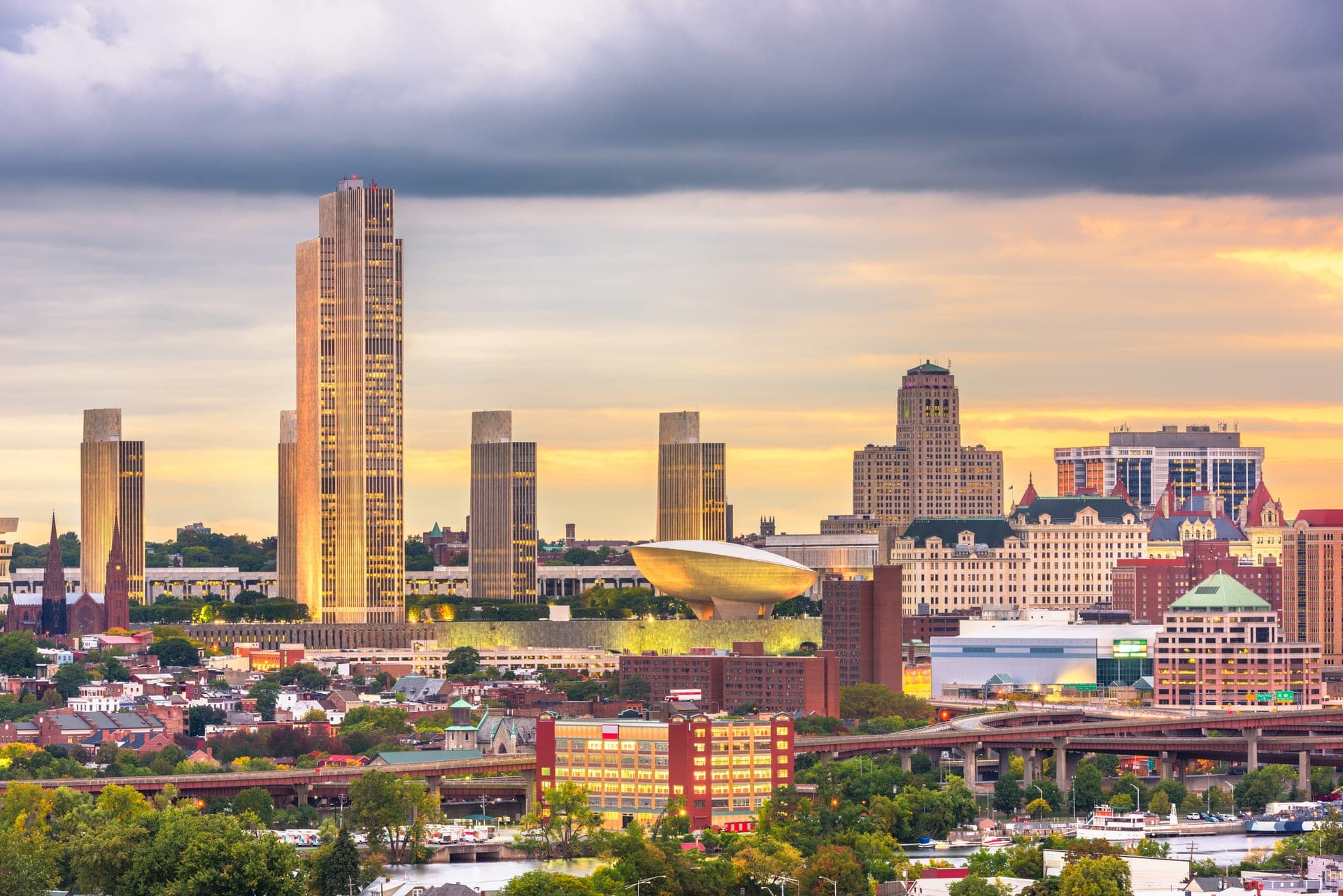
If you want to live in Albany and run most of your errands on foot, you have real choices, and they each feel different. The most walkable neighborhoods in Albany sit just west and south of downtown, where the street grid is tight, the sidewalks are continuous, and the corner you live on usually has a coffee shop, a park, or a bus stop within a few blocks. This is a plain comparison of five of them: Center Square and Lark Street, the Washington Park area, Pine Hills, the Mansion and Hudson-Park area, and Delaware Avenue. The point is to help you understand what makes each one walkable in concrete terms before you start touring homes. Sharon Fronk works with buyers across these neighborhoods and can tell you how each block actually lives day to day.
Center Square and Lark Street
Center Square is the neighborhood people usually picture when they think of walkable Albany. It sits between the Empire State Plaza and Washington Park, and most of its housing stock is two-to-four-story brick rowhouses from the 19th century, with wrought-iron railings, tall windows, and tree-lined streets. The architecture is part of the Center Square/Hudson-Park Historic District, a roughly 27-block area of preserved rowhouses ranging from Italianate to Queen Anne and Federal styles.
Lark Street is the spine of it. Within a short walk you have independent restaurants spanning Greek, Thai, Indian, and Tex-Mex, plus coffee shops, art galleries, a few boutiques, bookshops, and bars. Lark also hosts street events through the year, including Art on Lark and the Lark Out Loud music festival. For transit, CDTA buses run along Lark Street, Madison Avenue, and Washington Avenue, and the Route 10 Western Avenue line includes a Lark Street stop that connects you toward downtown in one direction and the university area in the other.
The Washington Park Area
The blocks fronting and surrounding Washington Park give you the same rowhouse density as Center Square with a large green space at your doorstep. The park itself was shaped around a plan from Frederick Law Olmsted's firm, and it covers roughly 80 acres of lawns, paths, and a lake. The 1929 Lake House, with its tile roof and veranda, overlooks the water and anchors an outdoor amphitheater where summer performances are staged.
Living here means a flat, walkable loop is part of your routine, along with landmarks like the bronze Robert Burns statue and the tulip beds that draw the Tulip Festival every spring, a tradition running since 1949. Because this area overlaps with Center Square, you get the Lark Street shops and the same Madison Avenue and Washington Avenue bus service within a few blocks. It is one of the easier parts of Albany to live in without driving every day.
Pine Hills
Pine Hills is a larger, denser neighborhood a couple of miles west of downtown, and it walks differently than Center Square. The housing is mostly early-1900s revival styles, Victorian, Colonial, and Spanish, with Craftsman bungalows and some ranch homes mixed in. Streets are gridded and sidewalked, and two commercial corridors do the heavy lifting: Madison Avenue and Western Avenue.
Along those corridors you can reach a wide range of restaurants on foot, with options from Indian to Colombian to Italian to Mediterranean within a few blocks, plus everyday anchors like a public library branch, a full grocery store, churches, and several parks. The University at Albany downtown campus and The College of Saint Rose sit inside or beside the neighborhood, which keeps the streets busy. For transit, this is one of the best-served parts of the city: Route 10 on Western Avenue, Route 12 on Washington Avenue, and Route 114 on Madison and Western all pass through, connecting toward downtown, the university, and Crossgates Mall.
The Mansion and Hudson-Park Area
South and east of Center Square, the Mansion neighborhood and the Hudson-Park blocks give you rowhouse living on hillier, quieter streets. The area takes its name from the nearby New York State Executive Mansion, and its rowhouses, many of them brightly painted, were largely built in the mid-to-late 1800s, with a few dating to the 1820s. The effect is a compact, distinctly historic streetscape that some compare to an enclave lifted out of a bigger city.
On foot you are less than a mile from downtown, with Lincoln Park close by for green space and the Empire State Plaza walkable for state workers and events. You are also a short walk from the Lark Street shops and restaurants in one direction. It is a smaller, lower-key alternative if you want the rowhouse architecture and central access without the busier feel of Lark.
Delaware Avenue
Delaware Avenue runs south of the Empire State Plaza and gives you a true main-street style of walkability built around a continuous commercial strip. The draw here is that you can reach almost everything on the avenue itself: locally owned shops, a hairdresser and cleaners, banks, an ice cream parlor, and a stretch of restaurants and bars without getting in the car.
The neighborhood centers on Spectrum 8 Theatres, the city's longtime independent cinema, now operated as Scene One Entertainment, which is a genuine rarity inside city limits. Nearby you have spots like New World Bistro Bar and Cardona's Market, a popular Italian deli for lunch, and Lincoln Park is within reach for outdoor space. CDTA Route 18 runs the length of Delaware Avenue seven days a week, continuing south toward Delmar, so transit follows the same line your daily errands do.
How To Compare Them
A few honest distinctions to weigh as you tour:
- Center Square and the Washington Park blocks give you the densest rowhouse walkability and the most shops and events at your door, with a park built into the routine.
- Pine Hills trades some of that compactness for a larger neighborhood, more freestanding houses, and the broadest CDTA bus coverage of the group.
- The Mansion and Hudson-Park area offers the same historic rowhouse architecture in a smaller, quieter pocket that is still walkable to downtown and Lark Street.
- Delaware Avenue is the main-street option, where one commercial corridor covers most of your daily needs and the Route 18 bus mirrors it.
Walkability is one of those things that reads clearly on a map and then feels different once you stand on the sidewalk, listen to the street, and time the walk to the bus stop. Sharon Fronk knows these Albany neighborhoods block by block and can help you match the right one to how you actually want to spend your days. If you are weighing a move into the city and want a no-pressure conversation about which walkable Albany neighborhood fits you, reach out to Sharon through this site and she will talk it through with you.
Enjoyed this article?
Get weekly real estate insights delivered to your inbox.