
Relocating to the Capital Region: A Buyer's Orientation
Moving to the Albany area? A plain-spoken buyer's orientation to the Capital Region: the four core counties, the major travel corridors, how property taxes vary, and what Upstate winters are really like.

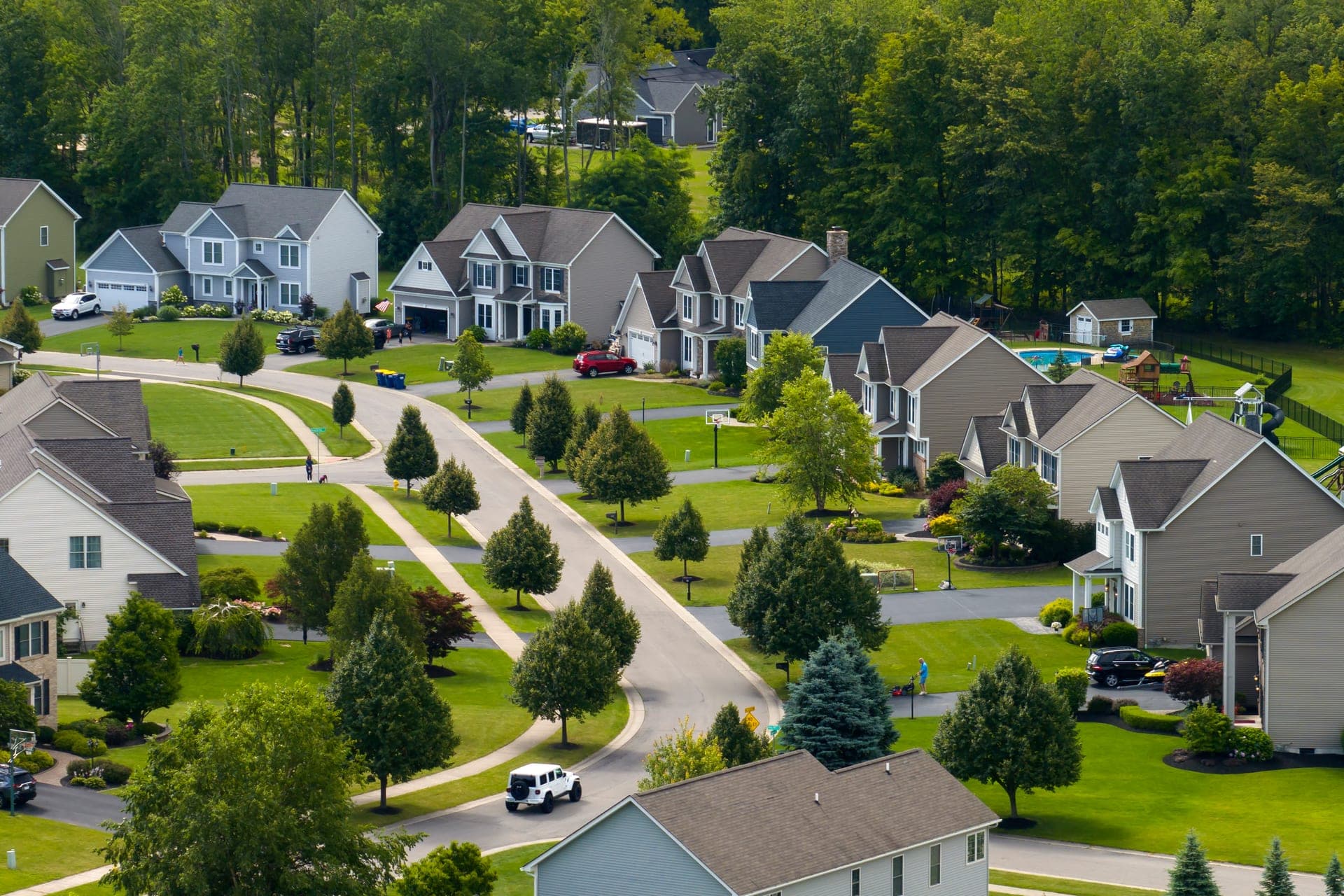
If you are relocating to the Capital Region from out of state or from downstate, the first thing to understand is that "the Albany area" is really a cluster of four counties that each feel different on the ground. Albany, Saratoga, Schenectady, and Rensselaer sit where the Hudson River and the Mohawk River meet in Upstate New York, with the Adirondack Mountains rising to the north and the Berkshires and Taconics to the east. You can live within a thirty-minute radius and choose between a walkable city street, a small village center, a suburban subdivision, or open farmland. This orientation walks through the geography, the travel corridors, the way property taxes work here, and the four-season climate, so you can search smartly from a distance. Sharon Fronk works with buyers making exactly this move, and the questions below are the ones that come up first.
The four core counties at a glance
Think of the region as four counties stitched together by two rivers. Here is the high-level lay of the land, by setting and geography rather than anything else.
- Albany County sits on the west bank of the Hudson River and holds the state capital. The city itself is dense and walkable in spots, and the county stretches west and south into suburban towns and then into hill country.
- Rensselaer County is across the Hudson on the east bank and runs along more than thirty miles of the river. It moves quickly from the riverfront cities into rolling countryside and farmland the farther east you go toward the Massachusetts and Vermont lines.
- Schenectady County lies along the Mohawk River to the northwest, anchored by the city of Schenectady and surrounded by suburban towns and river-valley land.
- Saratoga County is the northern county, with the Mohawk River as its southern boundary and the Hudson along its eastern and northern edges. It ranges from the city of Saratoga Springs into rolling farmland and up toward the southern Adirondacks.
The practical takeaway is that "close to Albany" can mean a downtown block, a cul-de-sac, or a property with acreage, all within a reasonable drive. Naming the county is only a starting point. The town and the specific corridor matter far more to your day-to-day.
The travel corridors that shape your commute
The region is built around a small number of highways and rail lines, and where a home sits relative to them tends to drive commute times more than raw distance.
- Interstate 87 is the Adirondack Northway, running north from Albany toward Lake George, the Adirondacks, and ultimately the Canadian border. South of Albany the same route continues as the New York State Thruway toward New York City. The I-90 and I-87 interchange in Albany is the busiest exit on the Thruway, so traffic patterns there are worth understanding before you commit to a commute.
- Interstate 90 runs east to west through the region. A stretch through Albany and its eastern suburbs is toll-free, while the route east toward the Massachusetts Turnpike and the Berkshires uses the tolled Berkshire Connector.
- Interstate 787 is the main artery into and out of downtown Albany along the Hudson, connecting to I-90 north of the city center.
For rail, the region is unusually well served for its size. The Albany-Rensselaer station is one of Amtrak's busiest stations in the country and functions as a hub on the Empire Corridor toward New York City, with multiple daily trains. There are also stations in Schenectady and in Saratoga Springs, served by routes such as the Empire Service, the Ethan Allen Express toward Vermont, and the Adirondack toward Montreal. If a regular trip to New York City is part of your life, living near one of these stations can change the calculation. Schedules and which trains stop where do change, so confirm current timetables directly with Amtrak before you lean on a route.
How property taxes vary across town and school district
This is the single thing relocating buyers most often underestimate, especially coming from states with a simpler tax structure. In New York, property taxes are local, set and collected by counties, towns, cities, and school districts, so two homes of similar value can carry meaningfully different annual tax bills depending on which town and which school district they sit in.
A few mechanics worth knowing. School taxes are usually the largest piece of the bill, and a single school district can span more than one town, which is reconciled through state equalization rates. That is why two homes near each other, even feeding the same school district, can owe different amounts. New York also runs the STAR program, which provides a reduction tied to school taxes for eligible owner-occupants, with a separate Enhanced STAR for qualifying seniors. STAR applies only to the school portion, not to county or town taxes.
Because of all this, the tax line matters as much as the price when you compare homes across town lines. For current rates and exemption details, confirm specifics with the local assessor's office or the New York State Department of Taxation and Finance, and ask a tax professional about your own situation. For up-to-date local market figures, see the market reports on this site rather than relying on rules of thumb.
What four real seasons actually mean here
The Capital Region has a humid continental climate with four distinct seasons, and that includes genuine Upstate winters. Expect warm, sometimes humid summers, a long and colorful autumn, a true spring, and winters that are cold and snowy. Snow typically arrives in late fall and can linger into spring, so plowed driveways, winter tires, heating systems, and roof and gutter condition are all things to factor into a home you have only seen online.
When you tour or inspect a property, it is worth asking how the heating system is configured, how the home handles snow load and drainage, and what winter access looks like on rural roads. For anything mechanical or structural, rely on a licensed inspector or the relevant trade professional rather than assumptions, and check current seasonal averages with the National Weather Service office in Albany if you want hard numbers for a specific area.
Searching smart from a distance
Buying from another state or from downstate is very doable here, but a little structure helps. A sensible approach looks like this.
- Start by ranking what actually drives your day: a specific commute corridor, proximity to a rail station, acreage versus walkability, or a particular school district named as a neutral fact.
- Compare the full carrying cost, not just list price, by always pulling the property taxes for each town and district you are considering.
- Plan at least one in-person visit across different times of day, and ideally factor in how an area feels in winter, not only on a clear summer afternoon.
- Line up local professionals early: a licensed inspector, a lender familiar with New York closings, and an attorney, since real estate transactions here typically involve one.
Relocating is a lot to hold in your head at once, and the details that matter most are local. If you are considering a move to the Capital Region and want a clear, no-pressure conversation about the counties, the corridors, and the trade-offs for your situation, reach out to Sharon Fronk. She is happy to help you orient before you ever book a flight.
Enjoyed this article?
Get weekly real estate insights delivered to your inbox.